Affiliate disclosure: This post may contain affiliate links. I may earn a small commission if you purchase through them, at no extra cost to you. Thank you!
Heads up: I'm not a doctor. These recipes are for inspiration, not medical advice. Always consult your healthcare provider before changing your diet. Sometimes I curate recipes and share them with you, keeping sugar conscious and lower carb choices in mind.
You mop the floor and it looks fine. Then the light hits the grout lines, and there it is: gray, dull, maybe a little black near the stove.
A regular mop rarely fixes it. So when it is time to clean kitchen floor grimy grout, the first instinct is often a bottle of bleach or an expensive spray.
One tap tells Google to show ZeroSugarBites first in Search and AI answers.
 Add us on Google
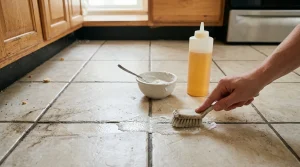
Hold off for a minute. Two ordinary items from your kitchen can handle a lot of everyday grime. One cuts through greasy film. The other gives dull lines a gentle lift. You probably have both within arm’s reach right now.
This guide shows you how to clean floor grout in kitchens with them, how to approach dark and stubborn lines, and what to avoid so you do not damage the grout you are trying to save.
One honest note first. Results depend on your grout type, your tile material, and what the stain actually is. No pantry method works on every floor, and I will point out where this one will not.
Why Kitchen Grout Gets Dirty So Fast
Most floor grout is cement based, which makes it porous. Tiny openings absorb grease, spills, and dirty water.
Kitchens add cooking splatter, foot traffic, and the occasional dropped sauce. A mop can also push dirty water into the lines instead of lifting it out.
The 2 Kitchen Staples That Clean Grimy Grout

Have Ingredients? Make a Sugar-Free Recipe!
Enter the ingredients you have at home and discover easy, sugar-free recipe ideas made for your everyday cooking.
Create My Free Recipe → Simple ingredients. Easy ideas. Less added sugar.Staple 1: Dish Soap
Plain liquid dish soap is built to break up grease and food residue. That is exactly what coats most kitchen grout.
It is also a pH neutral cleaner. A grout maker’s technical bulletin lists diluted dishwashing soap as a routine cleaner for cement based, premixed, and epoxy grout. You can read it in the TEC grout cleaning bulletin.
Staple 2: Baking Soda
Baking soda is mildly alkaline and slightly gritty. Mixed into a paste, it helps loosen grime from dull grout lines without the harshness of an acid or a strong chemical.
It is not a disinfectant, and it is not magic. Think of it as a gentle spot treatment for lines that dish soap alone does not brighten.
The same bulletin cautions against abrasive cleaners for everyday use and reserves them for spot cleaning. That is why baking soda works best as an occasional paste, not a daily scrub.
Why This Pair Is a Smart Starting Point
- Both are cheap and already in most kitchens.
- Neither is an acid, so they are a safer fit for cement grout.
- You can use them to clean tile grout naturally, without harsh fumes. Natural does not mean risk free, so test first.
How to Clean Floor Grout in Kitchens, Step by Step
This is the easiest way to clean grout on tile floors for most homes. It works best on light to moderate grime.
What You Need
- Liquid dish soap
- Baking soda
- Warm water
- A spray bottle and a small bowl
- A soft bristle brush (an old toothbrush works for small areas)
- Microfiber cloths or a clean mop
A dedicated brush makes the job easier because the narrow head fits into grout lines. If you want one, a soft bristle grout brush is an inexpensive option. Look for firm but not wire bristles.
V-shaped, telescopic handle, crevice cleaning included, Grout cleaner for tile floors
See it on AmazonSteps
- Clear and sweep. Vacuum or sweep first so you are not grinding grit into the grout.
- Test a hidden spot. Pick a corner or a spot under an appliance. Wait until it dries to check for color change.
- Make the soap spray. Fill a spray bottle with warm water and add a few drops of dish soap. Keep it light, because too much soap leaves residue.
- Spray the grout lines. Let it sit for 5 to 10 minutes. This waiting time does much of the work.
- Mix the paste. In a bowl, stir baking soda with just enough water to make a thick, spreadable paste.
- Apply to dull or stained lines. Press it along the grout and leave it for 10 to 15 minutes. Do not let it dry hard.
- Brush gently. Work in small sections along the line, using light pressure. Heavy scrubbing can wear down grout over time.
- Rinse well. Wipe with a damp cloth and clean water, changing the water often. Leftover residue can leave a film and attract dirt.
- Dry the area. Buff with a clean cloth. A pack of microfiber cloths is handy here because they grab moisture and loose residue without shedding lint.
- Check the results once it dries. If lines are still dull, repeat the process once rather than scrubbing harder.
Ultra absorbent and high density, reusable cleaning towels for kitchen, car, glass and household surfaces, color coded cloths
See it on AmazonHow to Clean Grout That Has Turned Black With Baking Soda

Black grout can have a few causes. It might be ground in dirt, a greasy film that has trapped dirt, or mildew from moisture. Knowing which one you have changes the plan.
Start with the same method above, but give the baking soda paste a full 15 minutes and brush gently. Rinse and dry well, then look at it again once the grout is dry. Wet grout always looks darker.
If the lines lighten, repeat the process once or twice as needed. If they barely change after two rounds, the stain may be deep, the grout may be worn, or moisture may keep feeding the problem.
At that point, resist the urge to switch to something harsher. Try the alternatives below, or consider whether the grout needs repair or sealing.
How to Clean White Floor Grout
White grout shows every mark, so it gets dirty looking faster. The soap and baking soda method suits it well.
Rinse thoroughly, because leftover residue can leave white grout looking dingy. Stay away from harsh products that promise instant whitening. Some can yellow or weaken grout.
Alternative Approaches for Different Stains
Not every dark line is the same problem. Match the method to the mess.
Greasy Film Near the Stove and Sink
Use the dish soap spray and give it extra waiting time. For heavy buildup, grout makers point to alkaline cleaners for grease and soap scum. Choose a product made for tile, follow the label, and test first.
Mildew or Dark Spots in Damp Areas
This is more common when you clean bathroom floor tile grout. Improve ventilation first, since moisture keeps mildew coming back.
Some tile care guides suggest 3% hydrogen peroxide for mildew on grout. Test a hidden spot first, especially on colored grout. Never mix it with any other cleaner, and rinse afterward.
Hard Water and Mineral Deposits
This is the one area where manufacturers mention acid based products, and always with cautions. They are not for natural stone or acid sensitive tile. If you suspect mineral buildup, check your grout maker’s guidance or ask a tile professional instead of experimenting.
Stubborn, Set In Grime
If soap and baking soda are not enough, a pH neutral tile and grout cleaner is a reasonable next step. A pH neutral tile and grout cleaner can be a good option. Check the label to confirm it is safe for your tile and grout type, and that it is not acid based.
Zep Plus Grout Foaming Cleaner saves you time and effort with its high-tech invisible barrier that helps clean and protect grout from water, dirt and grime.
See it on AmazonHow Do Professionals Clean Grout?
Professionals do not rely on one magic product. The approach is usually about matching the method to the situation.
- Identify the grout and tile. Cement grout, epoxy grout, and natural stone are cared for differently.
- Pick the cleaner for the problem. Routine care uses a pH neutral cleaner. Grease may call for an alkaline product.
- Test first. A small hidden spot shows how the grout and tile react.
- Let the product work. Dwell time reduces the need to scrub.
- Rinse and dry. This stops residue from settling back into the joints.
- Seal when appropriate. Sealing can help protect cement grout after a deep clean. Follow the sealer’s instructions.
You can use the same logic at home. It is also the best way to clean floor grout without damaging it.
Can You Clean Floor Tile Grout Without Scrubbing?

Sometimes, with realistic expectations.
For light dirt and greasy film, a soap spray, a long waiting time, and a good rinse can lift a lot with very little brushing. A damp mop with a few drops of dish soap in warm water also helps between deeper cleans.
For set in stains or blackened lines, some gentle brushing is usually part of the job. Skipping it often just means repeating the process. A soft brush with light pressure is still far gentler than a harsh chemical.
What Should You Not Clean Grout With?
This matters as much as what you do use. The wrong product can weaken grout or change its color.
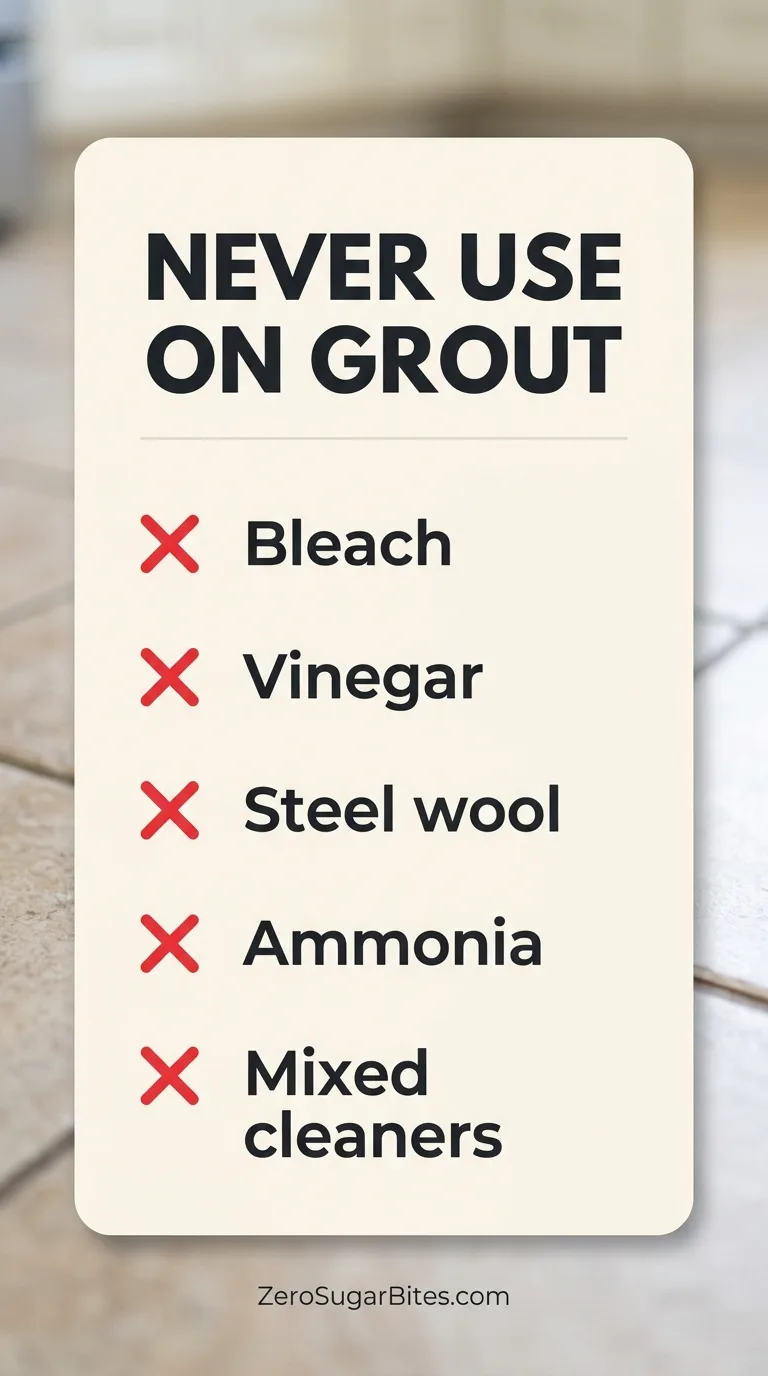
- Bleach. The grout maker bulletin above lists bleach among products to avoid on grout. It can lighten or yellow colored grout, and the fumes are unpleasant. Never mix bleach with ammonia or any other cleaner. The CDC states this plainly in its bleach safety guidance.
- Vinegar, lemon, lime, and other acids. Acidic products can degrade cement grout when used regularly, and they can damage natural stone.
- Ammonia based cleaners. The bulletin also lists ammonia as a product to avoid on grout.
- Abrasive powders, steel wool, and heavy mechanical scrubbers. They can wear down grout and strip sealer.
- Wax or oil based cleaners. They can leave a film that attracts more dirt.
- Any mixture of cleaners. Use one product at a time, and rinse in between.
Quick Safety Checklist
- Open a window or run a fan.
- Wear gloves if your skin is sensitive.
- Test a hidden spot and let it dry.
- Rinse thoroughly and dry the floor.
- If your grout is sealed, check the sealer maker’s cleaning instructions.
- If you have natural stone tile, use only products made for stone.
Keep Grout Cleaner for Longer
- Wipe up spills quickly. Juice, wine, ketchup, and soda can etch grout.
- Sweep or vacuum often so grit does not grind in.
- Rinse and dry after cleaning so dirt does not resettle.
- Place a doormat near entries and a washable rug by the sink.
- Clear floor clutter so weekly mopping goes faster.
These small kitchen organization ideas on a budget can help, and so can these small kitchen island storage ideas.
Frequently Asked Questions
What is the best way to clean kitchen floor grout?
For most homes, start with warm water and dish soap, then spot treat dull lines with a baking soda paste. Rinse well and dry. Heavier grease or stains may need a product made for tile.
How do I clean tile grout naturally?
Use dish soap and baking soda, which are common household ingredients. Natural does not mean risk free, so test a hidden area first.
Can baking soda clean black grout?
It can help with surface dirt and grime. It will not fix deep stains, moisture problems, or worn grout.
How do I clean bathroom floor tile grout?
The same soap and baking soda method works for light buildup. Because bathrooms stay damp, improve airflow and consider a hydrogen peroxide test for mildew.
How do I clean grout without damaging it?
Use a pH neutral cleaner, a soft brush, and light pressure. Test first, rinse thoroughly, and avoid acids, bleach, and abrasive products.
Is it okay to use bleach on grout?
Grout makers advise against it, and it can discolor some grout. If you ever use bleach elsewhere, never mix it with other cleaners.
Final Thoughts
You do not need harsh products to make grout look better. Dish soap and baking soda, plus patience and a good rinse, can freshen up many kitchen floors.
Know your limits, too. If grout is crumbling, deeply stained, or part of natural stone tile, it is worth checking with the manufacturer or a tile professional.