Last updated on May 2nd, 2026 at 11:38 pm
Heads up: I'm not a doctor. These recipes are for inspiration, not medical advice. Always consult your healthcare provider before changing your diet. Sometimes I curate recipes and share them with you, keeping sugar conscious and lower carb choices in mind.
Affiliate disclosure: This post may contain affiliate links. I may earn a small commission if you purchase through them, at no extra cost to you. Thank you!
If you’ve spent more than five minutes in the sugar free snack aisle, you already know the problem. Every label shouts “zero calories” or “keto friendly,” and yet allulose, stevia, monk fruit, and erythritol are four fundamentally different things. They behave differently in your coffee, your baked goods, and your body.
One tap tells Google to show ZeroSugarBites first in Search and AI answers.
 Add us on Google
This guide cuts through the confusion. Whether you’re managing blood sugar, following a low carb diet, or just trying to reduce added sugar without giving up dessert you’ll know exactly which sweetener (or combination) makes sense for you by the end.
Why it’s a win
- Allulose is considered the best all around option: it tastes like sugar, has minimal calories, doesn’t impact blood sugar, and typically causes no digestive issues.
- Stevia and monk fruit both offer zero calories and zero glycemic impact, but are so intensely sweet they’re usually blended with bulking agents.
- Erythritol carries emerging cardiovascular concerns that deserve serious attention before you use it in large quantities more on this below.
- There is no universally “best” sweetener. The right choice depends on your health goals, cooking method, and tolerance.
Allulose vs Monk Fruit vs Stevia Vs Erythritol Comparison
| Category | Allulose | Stevia | Monk Fruit | Erythritol |
|---|---|---|---|---|
| Sweetness vs. sugar | ~70% | 200–300× | 100–250× | ~70% |
| Calories | ~0.3 kcal/g | 0 | 0 | ~0.2 kcal/g |
| Glycemic index | ~1 | 0 | 0 | 0 |
| Aftertaste | None | Mild–moderate | Mild | Cooling sensation |
| Bakes well | Yes | No | No (pure) | Partially |
| Caramelizes | Yes | No | No | No |
| Gut tolerance | Good (below ~27g) | Good | Good | Moderate |
| Cardiovascular safety | No concerns | No concerns | No concerns | Under review |
| Typical cost | Moderate | Low | High (pure) | Low |
| View On Amazon | View On Amazon | View On Amazon | View On Amazon |
My Go To Sweetener (Personal Pick)
As someone managing diabetes, I know allulose is a great option and works beautifully in many recipes. Still, I personally reach for stevia in my everyday meals. It’s affordable, easy to find in most stores or online, and fits seamlessly into my routine.
Have Ingredients? Make a Sugar-Free Recipe!
Enter the ingredients you have at home and discover easy, sugar-free recipe ideas made for your everyday cooking.
Create My Free Recipe → Simple ingredients. Easy ideas. Less added sugar.What Are These Sweeteners, Really?
Before comparing them head to head, it helps to understand what each one actually is.
Allulose is classified as a rare sugar. It’s a naturally occurring sugar found in foods like wheat, maple syrup, brown sugar, and some fruits. Gram for gram, it’s about 70% as sweet as table sugar, but has only a tenth of sugar’s calories because, unlike sugar, the body doesn’t break it down for energy it’s excreted mostly intact.
Stevia is a plant derived, high intensity sweetener. Its sweet compounds steviol glycosides are not carbohydrates in the conventional sense and do not raise blood sugar. They are metabolized in the gut and liver, then excreted.
Monk fruit (also called luo han guo) originates in Southeast Asia. This zero calorie sweetener has been used in Traditional Chinese Medicine for almost 1,000 years and is 100 to 250 times sweeter than table sugar. It doesn’t have the same impact on blood sugar levels and comes in granules, syrup, or liquid drops.
Erythritol is a sugar alcohol. It offers around 60–70% the sweetness of sugar and almost no usable calories, with a very low glycemic impact. It’s widely used for baking and as a bulk ingredient in many “keto” products.
Taste: Which One Actually Tastes Like Sugar?
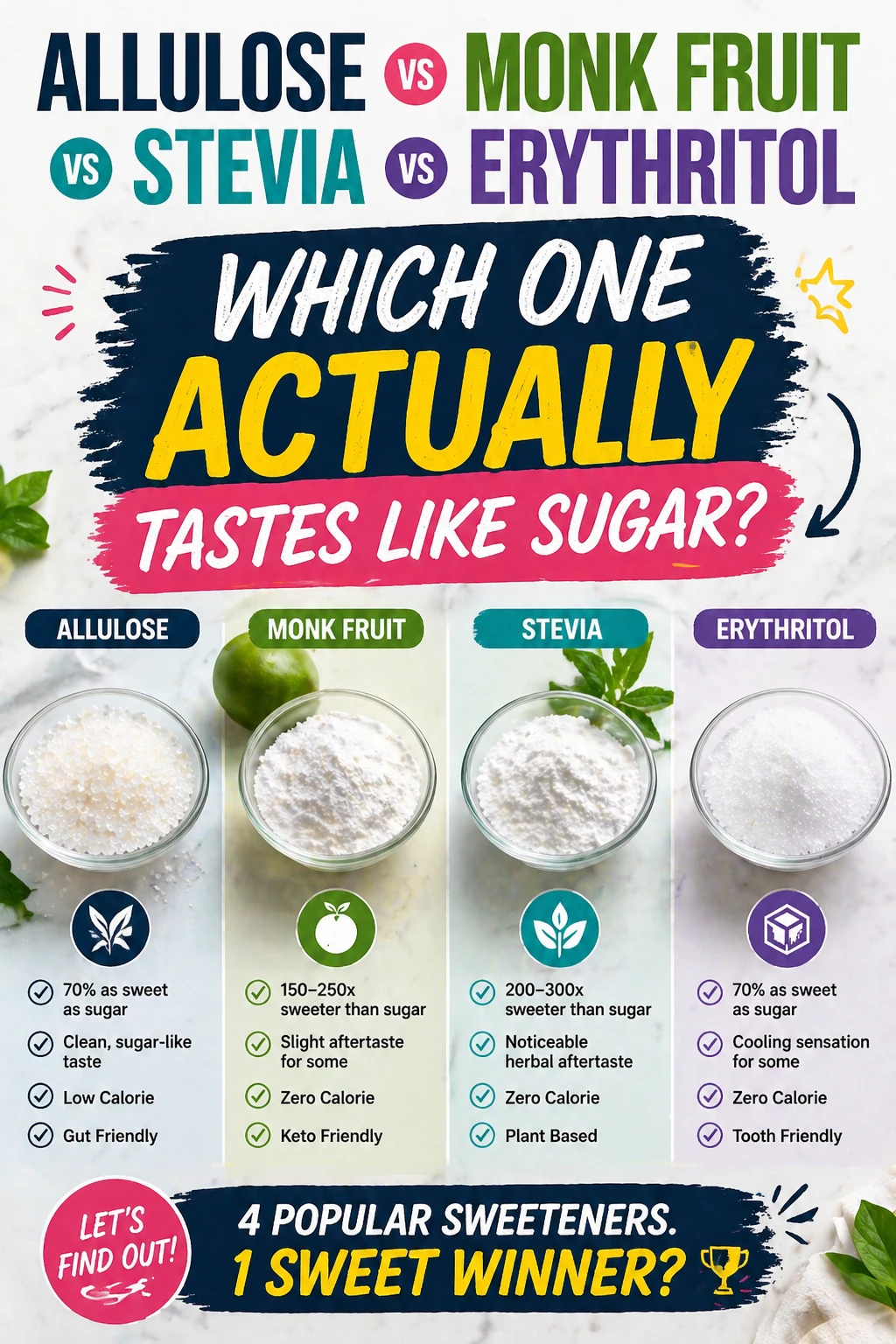
Taste is where the biggest gaps appear and where most people make their first mistake.
Allulose tastes remarkably similar to sugar, with very little aftertaste. It also mimics sugar’s mouthfeel and browning behavior in cooking and baking, which is one reason many people find it especially satisfying in desserts.
Stevia tends to cause a strong chemical aftertaste for many people, though high purity extracts have improved significantly in recent years. It works well in beverages but can become noticeable in baked goods.
Monk fruit extract has a clean, pleasant sweetness with a subtle fruity warmth. Because it is so intensely sweet, it is usually blended with a bulking sweetener like erythritol or allulose to mimic the sweetness and texture of sugar more closely.
Erythritol is pleasant in moderate amounts, but it comes with a well-documented cooling sensation in the mouth similar to mint that some people find off-putting, particularly in chocolate or warm drinks.
The verdict on taste: Allulose wins here, and it isn’t particularly close. For people who want to replicate the full sugar experience, it’s the most faithful substitute available.
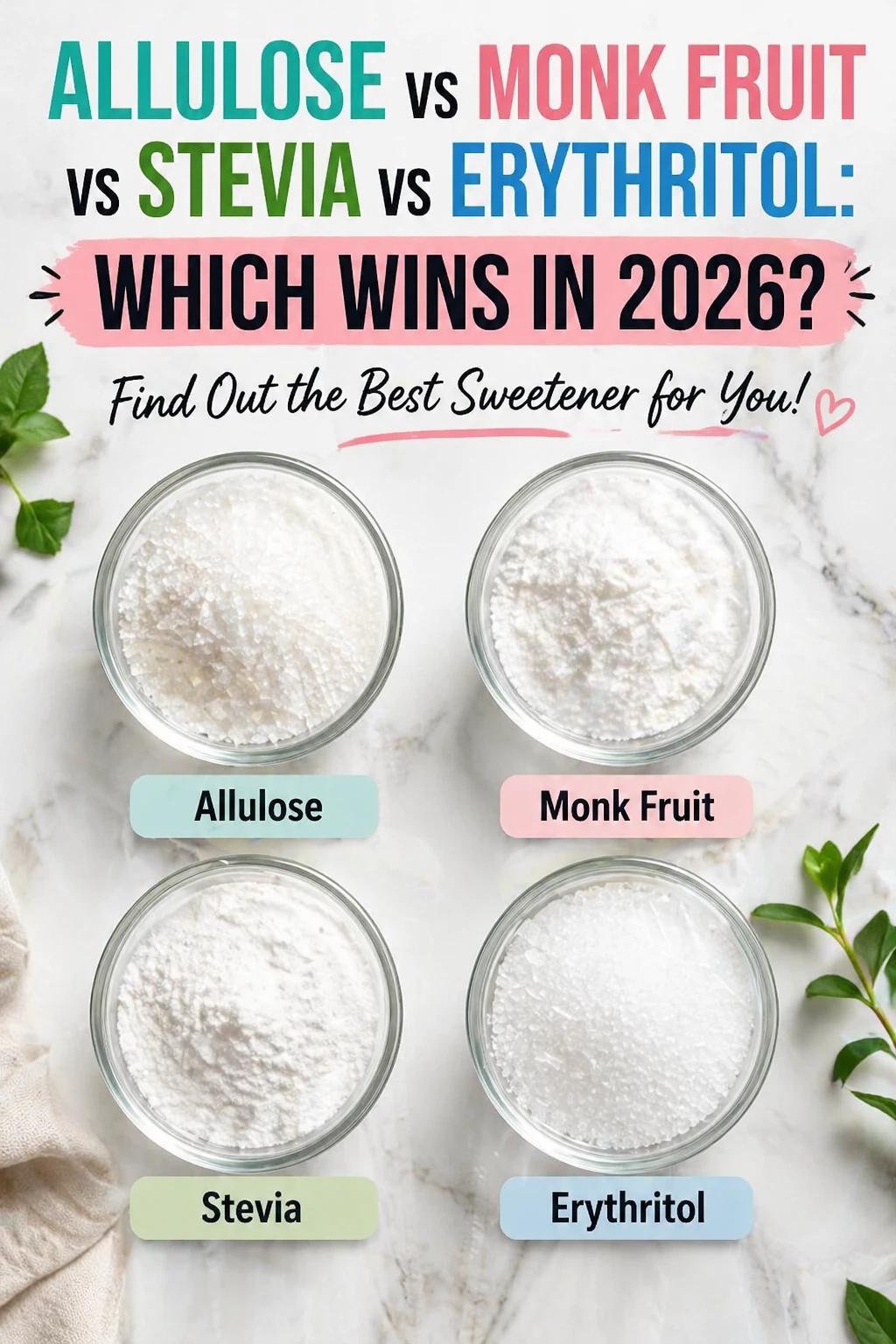
Blood Sugar and Glycemic Impact
This is the category that matters most to people with diabetes, prediabetes, or anyone following a ketogenic or low glycemic diet.
All four sweeteners score very well compared to regular sugar. The best sweeteners for people with diabetes are natural sweeteners with a low or zero glycemic index like stevia, monk fruit, and allulose.
Allulose actually goes a step further than the others. Some studies find that eating allulose with a meal may actually lower blood sugar levels after the meal, making it an especially good choice for people with diabetes.
Allulose may promote blood sugar control and support weight management by enhancing GLP-1 release. Human studies have shown that meals with allulose significantly reduce blood sugar and insulin responses, especially in people with pre-diabetes or diabetes.
Erythritol, stevia, and monk fruit all have a glycemic index of essentially zero, making them appropriate choices for blood sugar management when used in reasonable amounts.
erythritol vs allulose vs monk fruit vs stevia for baking performance
If you bake, this section might be the most important one you read.
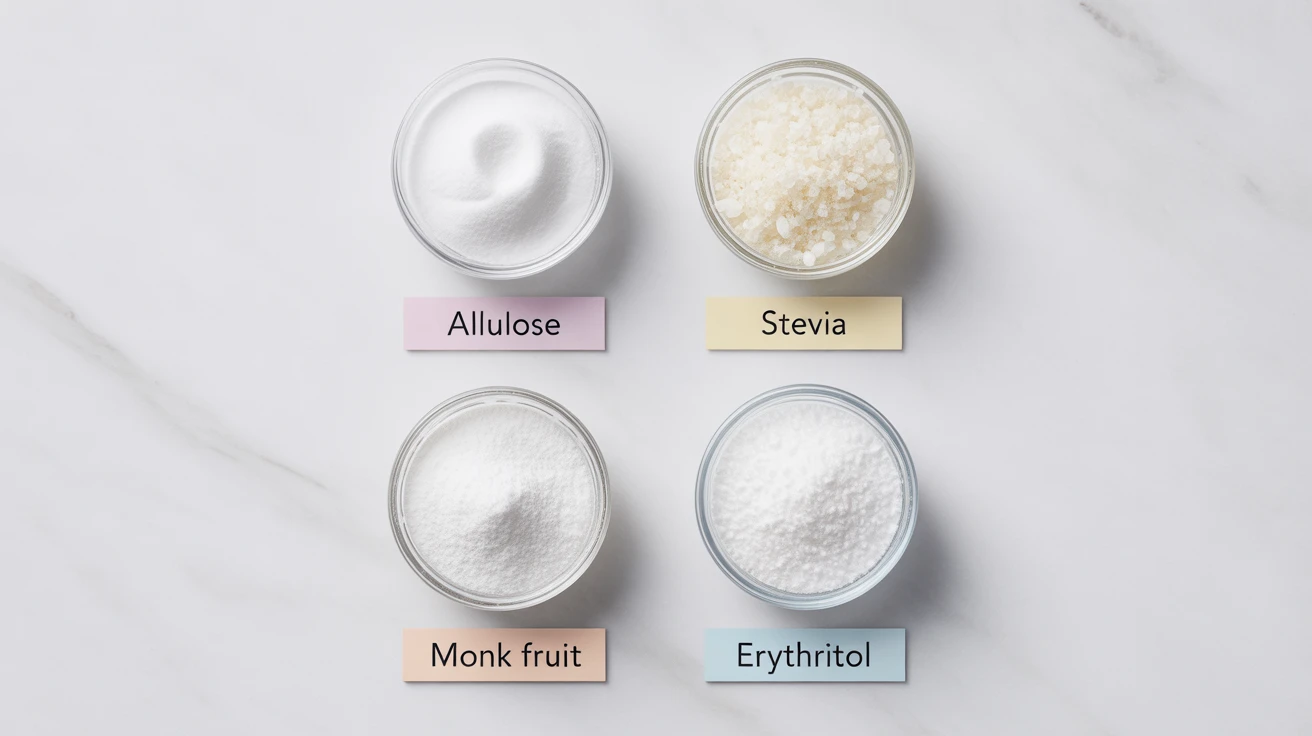
Allulose (Best for Baking Performance)
- Browns, caramelizes, and retains moisture like sugar, producing soft and moist baked goods.
- Note: Reduce oven temperature by about 25°F and check for doneness earlier.
Erythritol (Texture Limitations)
- Tends to create a drying effect and may crystallize, resulting in a gritty texture.
- Does not brown or caramelize effectively.
Stevia (Limited Baking Use)
- Provides sweetness without bulk, texture, or browning.
- More suitable for beverages, yogurt, and sauces than structured baking.
Monk Fruit (Best in Combination)
- Pure extract does not contribute to texture or structure.
- Most effective when blended with allulose for improved baking results.
Baking verdict: Allulose is the clear winner. A monk fruit + allulose blend comes in a close second and is widely available as a product.
Digestive Tolerance: What Happens in Your Gut
This is where some popular sweeteners fall short despite their otherwise clean profiles.
Allulose can cause trouble in the gut at high doses. When researchers fed increasing doses to 29 people, about a third had diarrhea, bloating, or abdominal pain after consuming a single high dose roughly 35 grams for a 150-pound person. They had no symptoms at 27 grams. In practical terms, this means moderate daily use is fine for most people.
Erythritol, like other sugar alcohols, is more likely to cause stomach upset than allulose. Monk fruit on its own does not cause digestive issues, but brands that contain erythritol — as most do — can.
Stevia is generally very well tolerated at normal amounts, though some people report mild digestive discomfort with larger quantities.
The Erythritol Safety Concern You Need to Know About
This is not a reason to panic, but it is a reason to pay attention.
Sugar alcohols, particularly erythritol and xylitol, have been implicated in increased cardiovascular risk, although a direct causal relationship between their use and cardiovascular events has not yet been conclusively established.
The concern centers on blood clotting.
In 2024, an NIH funded research team at the Cleveland Clinic found that elevated levels of erythritol in the blood were associated with increased risk of heart attack and stroke.
After healthy volunteers consumed an erythritol sweetened beverage, blood erythritol levels increased 1,000 fold and remained substantially elevated for several days long enough to trigger changes in platelet function.
Cleveland Clinic researchers urge that high risk patients those with obesity, diabetes, or metabolic syndrome avoid highly processed sugar free foods, instead recommending occasional sugar sweetened treats until more clinical studies are completed.
The science is still evolving, and erythritol hasn’t been proven definitively dangerous in healthy people at low doses. But given that general guidance suggests limiting erythritol intake to under 10 grams per day, and that many “keto” products contain far more than that per serving, it’s worth reading labels carefully.
Foods and drinks sweetened with stevia or monk fruit remain your safest bets from a cardiovascular perspective.
Who Should Use Which Sweetener?
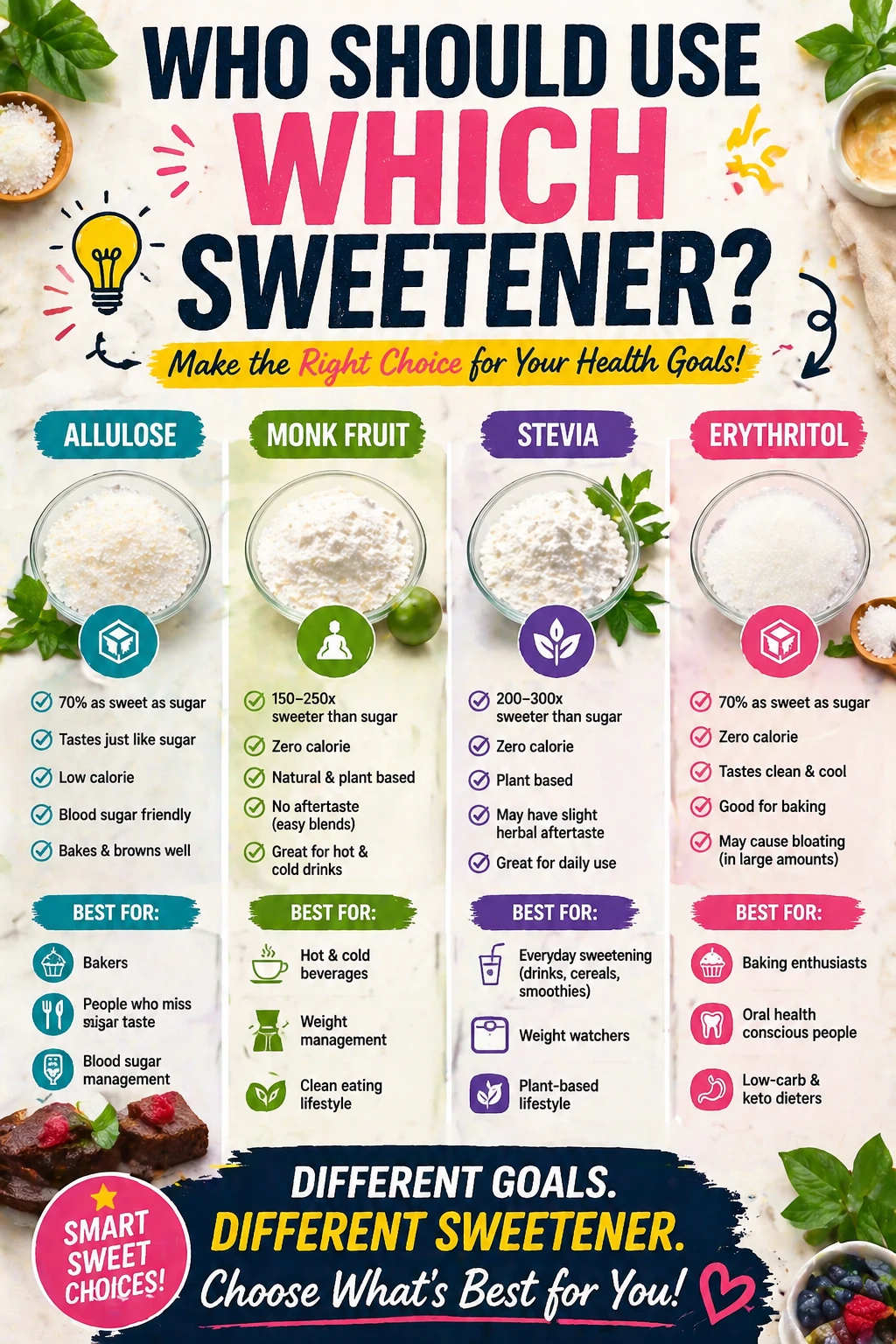
Choose allulose if: You bake frequently, want the closest thing to a 1:1 sugar replacement, or are managing blood sugar. It’s the most versatile option and delivers the cleanest experience in both taste and cooking performance. View On Amazon
Choose stevia if: You primarily sweeten beverages — coffee, tea, smoothies — and want zero calories with zero fuss. Liquid stevia drops are easy to control and widely available. View On Amazon
Choose monk fruit if: You want the cleanest possible label with no artificial ingredients and can manage the cost. Look for blends that pair monk fruit with allulose (not erythritol) for the best results. View On Amazon
Choose erythritol cautiously if: You need a bulk ingredient and are otherwise healthy with no cardiovascular risk factors. Keep your daily intake under 10 grams and avoid it if you have a history of heart disease or are at elevated risk. View On Amazon
Best combination for most people: A monk fruit + allulose blend. You get the intensity of monk fruit and the functional sugar like behavior of allulose in one product, with none of the digestive or cardiovascular concerns of erythritol.
Pricing and Value
- Stevia and erythritol are the most affordable options and are widely available at grocery stores and online.
- Allulose sits in the mid range more expensive per pound than erythritol, but you often use the same amount as sugar (1:1), so your effective cost per recipe is predictable.
- Pure monk fruit is the most expensive, partly because the extraction process is costly and partly because such a small amount is required per serving.
For high volume baking or daily use, allulose or a monk fruit/allulose blend offers the best balance of cost, function, and taste.
Frequently Asked Questions
Can I mix these sweeteners together?
Yes, and in many cases you should. Combining allulose with monk fruit is particularly effective allulose provides bulk and texture while monk fruit contributes intensity. This pairing avoids the erythritol related concerns while delivering excellent taste and baking results.
Are these sweeteners safe for people with diabetes?
All four have minimal to zero impact on blood glucose and insulin when used in normal amounts. Allulose may offer an additional benefit by slightly reducing post meal blood sugar spikes. Always consult your healthcare provider before making significant dietary changes if you’re managing diabetes with medication.
Why do so many “monk fruit” products contain erythritol?
Pure monk fruit extract is extremely concentrated around 200–300 times sweeter than sugar and very expensive. So companies dilute it to make it usable and affordable. That means when you buy “monk fruit sweetener,” what you’re often getting is mostly erythritol with a little monk fruit added for sweetness. Check ingredient labels carefully.
Is allulose actually natural?
Allulose is found in very small amounts in nature, so it is not feasible to extract it directly from fruits or plants. Most of the allulose available on the market is produced by enzymatic conversion of fructose, which is derived from corn starch. It is non GMO certified by many brands and is recognized as GRAS (generally recognized as safe) by the FDA.
Can I use these sweeteners for weight loss?
These sweeteners can support weight management by reducing overall calorie and sugar intake, but they are not magic solutions on their own. The World Health Organization has noted that evidence for sweeteners driving long term weight loss in isolation is limited. That said, replacing added sugar with allulose, stevia, or monk fruit is a reasonable and evidence-supported dietary strategy for most people.
Which sweetener is best for iced tea monk fruit, stevia, allulose, or erythritol?
Stevia liquid drops or monk fruit are your best bet both dissolve easily in cold liquid with zero calories and no aftertaste. Allulose also works well and tastes closest to sugar. Skip erythritol; it doesn’t dissolve well cold and can leave a gritty, cooling sensation.
Which sweetener is best for coffee if you have diabetes monk fruit, stevia, allulose, or erythritol?
Stevia and allulose are the strongest choices. Stevia drops are easy to control, while allulose blends smoothly and may even help reduce post-meal blood sugar spikes. Monk fruit works too just check the label to ensure it isn’t blended with erythritol.
What are some healthy breakfast ideas using stevia, monk fruit, erythritol, or allulose?
Plenty of easy options: sweeten Greek yogurt with stevia or monk fruit drops, use allulose in overnight oats or protein pancakes, or bake sugar free granola and muffins with allulose or erythritol. Simple rule use allulose for anything cooked or baked, stevia or monk fruit for cold or no cook meals.
Resources:
For further reading, see the Harvard T.H. Chan School of Public Health’s guide on sweeteners